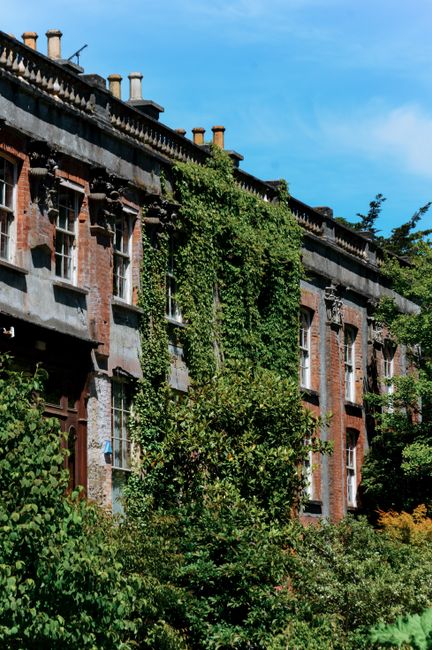
Commercial Waste Removal in Stoke Newington

Commercial waste removal in Stoke Newington should be straightforward, punctual and suited to the reality of busy premises. We collect and clear a wide range of business waste streams, helping offices, shops, hospitality sites and shared workspaces keep on top of unwanted items, packaging and general commercial rubbish. The service is arranged around practical loading, safe handling and responsible disposal, so your premises can stay organised while waste is removed with minimum disruption.
For many businesses, the value is in having one team manage the heavier or awkward material as well as the routine buildup. We focus on clear collections for items that are difficult to move, bulky enough to block access or simply too much for normal bins. If you need to compare service details before arranging a collection, you can review the business waste removal page for a closer look at the main commercial option.
When a premises needs a larger clear-out, the work is easier to plan if the waste is grouped by type and access is understood in advance. That can include sacks, boxes, mixed office items and unwanted fixtures, provided they are within the scope of the service. If you are ready to talk through a collection, please request a quotation and we will help you choose the most suitable approach.
General commercial waste collections
General commercial waste collections are useful when a site produces mixed materials that do not justify a specialist visit. This can include routine non-hazardous business rubbish, packaging from deliveries, redundant paperwork, broken small items and the sort of accumulated clutter that occupies store rooms or back-office areas. The aim is to remove it efficiently, sort it appropriately and send recoverable material into the right disposal route where possible.
Businesses often prefer a collection that keeps disruption to a minimum and avoids unnecessary handling inside the building. Our crews can work through loading points, reception areas, side access or other practical entry routes, depending on the site layout and the nature of the waste. If you want a fuller outline of the wider service, the waste removal page gives a useful overview of the type of clearance work available.
Typical commercial waste is often easier to manage when it is separated into straightforward groups before collection. This does not need to be complicated; a simple division between loose sacks, cardboard, office items and any heavier pieces can make the visit smoother. Common decisions include:
- which items are reusable, recyclable or to be disposed of
- whether the load includes bulky objects needing two-person handling
- what route gives the clearest access for loading
- any items that should stay on site for records or reuse
Office waste and workplace clearance
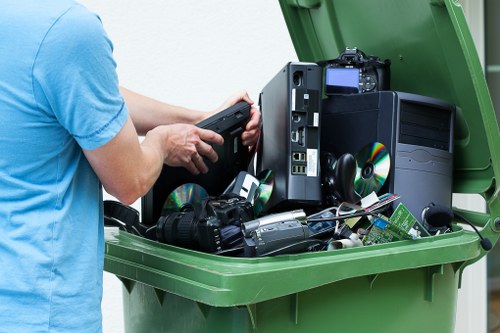
Office waste and workplace clearance cover the clearing of surplus furniture, old stock, obsolete equipment and general clutter from commercial interiors. This is often needed when a desk area is being reorganised, a storage room is full, or a business is replacing worn items and wants the old ones removed in one visit. The work can also include awkward items such as filing cabinets, shelving sections and mixed furniture pieces that are no longer needed.
For office settings, the priority is often to remove waste without creating unnecessary disruption for staff or customers. That means thinking about timing, access and the order in which heavier items are moved, especially where stairways, lifts or narrow corridors are involved. More detail on this kind of clearance is available on the office clearance page, which sits alongside the wider collection service.
Where documents or sensitive materials are involved, some businesses prefer to keep them separate from general waste and arrange a more controlled disposal route. Not every item in an office clear-out should be treated in the same way, and separating recyclable material, confidential material and general rubbish can help maintain better control over the job. If needed, this can be planned as part of the quotation rather than as a separate decision later.
Furniture, fixtures and bulky items
Furniture removal is often the main challenge in commercial waste work because bulky items take more lifting space and usually need a more careful route out of the building. Desks, chairs, cabinets, display units, shelving and reception furniture can all be cleared when they are no longer required. The aim is to remove the item safely, avoid damage to walls and floors, and keep the premises usable during the work.
Where a business is refurbishing or changing layouts, furniture disposal can also be part of a broader clear-out rather than a one-off item collection. The relevant page for this type of work is furniture disposal, and it is especially useful when the load includes more than simple office waste. Depending on what is being removed, the team may need to separate reusable pieces from items that must be treated as waste.
Some furniture is light enough to be carried quickly, while other pieces are awkward because of size, weight or shape. That difference matters because it affects how many hands are needed and how the room should be prepared before loading begins. Good planning is usually about the practical details: whether items can be dismantled, whether they pass through doorways intact and whether there are any restrictions on using lifts or shared corridors.
Clearances for homes used as business premises
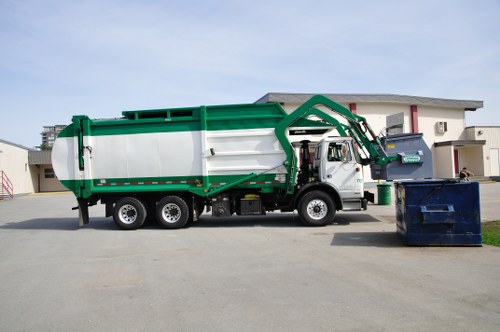
Some commercial waste removal jobs happen in buildings that are also used as homes, shared accommodation or mixed-use premises. In those situations, the work may involve furniture, general rubbish, old household-style items or a mixture of contents from storage spaces and living areas. The most suitable service depends on the type of load, the access available and how much sorting is required before removal.
Where the job is broader than a single item collection, flat clearance can be a helpful related option for apartments and similarly arranged premises. If the property contains a fuller mix of contents, the work may instead fit home clearance or house clearance, depending on the layout and the scope of the clear-out. The right choice is usually the one that best matches the actual items to be moved.
This type of work is often easier when a customer can describe what is staying, what is leaving and whether the items are concentrated in a single room or spread across several areas. A brief inventory is often enough to guide the quotation, especially if there are heavy pieces, stairs, narrow access or items that need careful handling. Once those points are known, the collection can be matched to the load more accurately.
Garden waste and outdoor clearances
Garden waste removal is useful when outdoor areas have become full of cuttings, branches, soil, old pots, broken fencing sections or unwanted outdoor equipment. For commercial properties, that can include gardens attached to offices, communal outdoor areas, forecourts and service yards. The work helps restore usable space while removing waste that is awkward to transport in ordinary bags or bins.
Outdoor waste can be quite mixed, so it helps to know what is organic, what is inert and what is being discarded because it has reached the end of its life. More information about this type of work is available on the garden clearance page, which covers the sort of items commonly taken from external spaces. In practice, access and load type are often just as important as the volume involved.
Where branches, clippings and heavier outdoor debris are being removed together, it is sensible to keep them separate where possible. That can make loading easier and may also support better sorting later. A compact load of soft waste may be straightforward, while wet soil, timber and mixed outdoor debris may need more planning. The quotation can usually be prepared once the contents and access route are understood.
Lofts, garages and stored items
Commercial waste removal is not limited to visible refuse; it also covers long-term stored items that have built up in loft spaces, garages and back rooms. These areas often contain broken equipment, spare fittings, packaging, archived materials, obsolete stock or furniture that was moved aside and never returned to use. Clearing them can free space for more practical storage and easier day-to-day access.
The relevant service depends on the structure and contents of the space. A loft full of mixed stored items may suit loft clearance, while a garage containing heavier miscellaneous waste may be better handled through garage clearance. The key point is to match the job to the area being cleared, rather than treating every store space in the same way.
These jobs often benefit from a little advance organisation because access points can be narrow and the contents may not all be visible at first glance. If you can identify which items are fragile, heavy or awkwardly stacked, the collection can be planned more safely. That also helps decide whether the work is a simple waste pickup or a fuller clearance with more handling involved.
About Stoke Newington
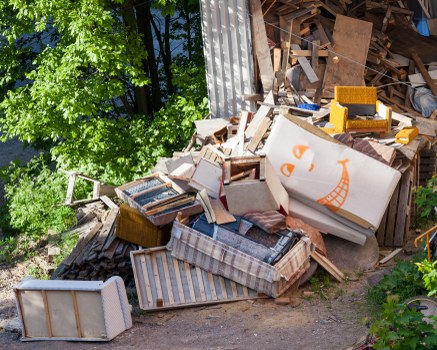
Stoke Newington is a district in north London within the London Borough of Hackney, shaped by layers of parish history, later suburban growth and twentieth-century redevelopment. Its older name appears in records from the medieval period, and the area retains traces of earlier settlement in the street pattern around the historic core. Church Street is one of the best-known local thoroughfares, with a mix of independent shops, cafés and Victorian-fronted buildings that give the area much of its character. The district also contains a number of residential terraces and mansion blocks that reflect different phases of urban expansion as London grew outward. Nearby, Abney Park is one of the borough’s most distinctive open spaces, created in the nineteenth century and now known both as a public park and as a place of considerable historic interest. The park’s tree cover, paths and memorial landscape make it an important part of the local environment, while Clissold Park provides a second major green space with lakes, sports facilities and broader recreational use. The wider area is also associated with the New River, the engineered waterway that once helped bring drinking water into London and still leaves a visible mark on the local landscape in places. Several churches, school buildings and converted civic structures add architectural variety, and the district’s cultural life has long been shaped by migration, local activism and a strong independent retail scene. Together, these features give Stoke Newington a balance of residential calm, urban density and accessible green space that sits within one of London’s most varied boroughs.
The local street pattern includes busier commercial strips as well as quieter side roads, and the distinction between them is part of the area’s everyday identity. Some buildings are compact and closely set, while others stand within larger plots or behind front gardens, creating a varied townscape rather than a single uniform type. The presence of public parks, older terraces and long-established community institutions means the area feels layered rather than newly planned. Its character comes from that mixture of history, open space and neighbourhood commerce.
Booking and practical preparation
For a smooth quotation, it helps to describe the main waste types, the approximate amount to be removed and how the team can reach the items. That does not need to be complicated. A few notes about stairs, loading points, parking restrictions or any items that are especially heavy can make the difference between a broad estimate and a more accurate one. If there are materials that need separate treatment, mention those clearly.
Photographs can also be useful when a job involves mixed waste or a room full of items, because they show both the volume and the access conditions. It is also worth saying whether the clearance needs to be complete, partial or staged over more than one visit. For further reading on cost factors, the pricing and quotes page outlines the sort of details that usually shape a quotation, while the book online page is useful if you want a direct route to arranging the job.
Good preparation usually means separating anything that should stay on site, keeping pathways clear where possible and identifying any items requiring careful handling. If the waste includes mixed commercial material, a little grouping in advance can help the collection proceed more efficiently. Please get in touch when you are ready for a quotation, and we will help you plan the next step.
Special items, safety and responsible disposal

Not every commercial clearance is made up of ordinary office furniture or general rubbish. Some jobs involve appliances, specialist items or waste that needs extra care because of weight, contents or handling requirements. Where the load includes fridges, freezers or similar equipment, the work can be reviewed through fridge and appliance removal, which suits premises replacing older equipment or clearing stored units from back rooms and service spaces.
Other items may call for more cautious treatment. Businesses sometimes ask about hazardous or restricted waste, and that requires checking exactly what is present before any collection is agreed. The relevant reference point is hazardous waste disposal, because not all waste can be handled in the same way as general commercial rubbish. Where items are suitable for standard removal, we aim to keep the process orderly and sensible.
We also pay attention to disposal routes and sorting, because commercial waste should be dealt with responsibly rather than simply loaded and forgotten. Where material can be separated for recycling or reuse, that is worth doing, and larger mixed loads are usually easier to manage when the contents are identified before collection day. If your site includes items such as old seating, office appliances or other bulky surplus, we can discuss the most suitable way to remove them.