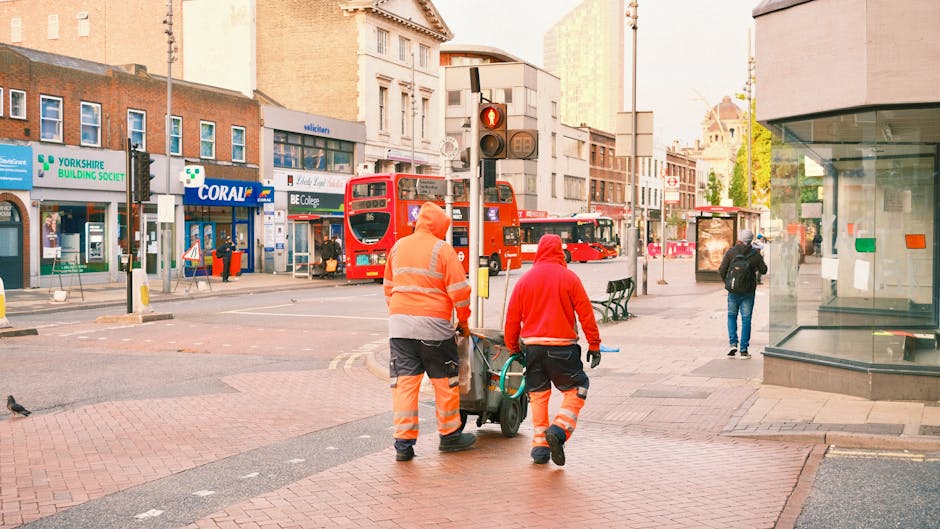
Stoke Newington High Street rubbish collection guide N16
If you're dealing with unwanted waste on or around Stoke Newington High Street, you'll know it can go from "I'll sort it later" to "this needs handling today" rather quickly. A blocked hallway, a shop store-room that's overflowing, a flat clearance after a move, or a pile of builder's rubble after a weekend project - it all adds up. This Stoke Newington High Street rubbish collection guide N16 is here to make the whole process feel clearer, calmer, and a lot less messy.
In practical terms, rubbish collection in this part of N16 is about choosing the right removal method for your waste, staying on the right side of local rules, and making sure the job is done efficiently without creating more disruption than necessary. That sounds simple enough. In real life, though, the details matter - especially on a busy high street where access, timing, and roadside space can be tricky.
This guide walks through how it works, who it suits, what to avoid, and how to make a sensible decision without overcomplicating things. You'll also find a checklist, a comparison table, and a few real-world pointers that help when the rubbish is already staring back at you from the corner of the room.
Quick take: if you want rubbish gone promptly, safely, and with minimal faff, plan the clearance around the type of waste, the access available, and whether you need a one-off collection or a fuller property clearance.
Table of Contents
- Why Stoke Newington High Street rubbish collection guide N16 matters
- How Stoke Newington High Street rubbish collection guide N16 works
- Key benefits and practical advantages
- Who this is for and when it makes sense
- Step-by-step guidance
- Expert tips for better results
- Common mistakes to avoid
- Tools, resources and recommendations
- Law, compliance, standards, or best practice
- Options, methods, or comparison table
- Case study or real-world example
- Practical checklist
- Conclusion
- Frequently asked questions
Why Stoke Newington High Street rubbish collection guide N16 Matters
Stoke Newington High Street has a character all its own: busy pavements, mixed-use buildings, flats above shops, food outlets, smaller offices, and the kind of everyday foot traffic that makes any waste problem more visible than it would be in a quiet side street. A single mattress left in the wrong place, or a few builders' bags overfilled and awkwardly stacked, can become a nuisance fast.
That's why a clear rubbish collection plan matters here more than it might elsewhere. It isn't just about tidiness. It's about access, presentation, safety, and keeping a property functioning. For businesses, that might mean staying presentable to customers. For residents, it may be about reclaiming space and avoiding that awkward "where do we put this?" moment that seems to linger for days.
There's also a practical local angle. High streets tend to have tighter logistics. Parking can be limited, loading can be time-sensitive, and nobody wants a clearance job dragging on while pedestrians weave around it. The better your plan, the smoother everything feels. Honestly, that is half the battle.
Another reason this matters is waste type. Not all rubbish is equal. A few bags of general waste are very different from bulky furniture, plasterboard, garden cuttings, electricals, or anything that may need separate handling. If you sort that early, you save time and reduce the chance of a collection being delayed or priced poorly.
How Stoke Newington High Street rubbish collection guide N16 Works
At a basic level, rubbish collection in N16 usually follows a simple pattern: you identify the waste, arrange the removal, set out the items safely, and make sure the collection can happen without problems. The details vary depending on whether you're removing household clutter, commercial waste, furniture, or mixed debris from a renovation.
In many cases, the process starts with assessing what you actually have. That sounds obvious, but it's where many people trip up. A tidy pile in the corner can hide a surprising mix: old chairs, packaging, a broken fridge, a bag of confidential paperwork, and a couple of paint tins. Once you know what's there, you can choose a suitable removal method.
For a small amount of waste, a straightforward one-off collection may be enough. For larger jobs, you might need a bigger waste removal service, a flat clearance, or a more specialised clearance such as furniture disposal or fridge and appliance removal. If it's a broader house or office reset, a more complete service can be the cleaner option.
The next step is access. Stoke Newington High Street can be awkward if you've got tight stairs, narrow hallways, basement storage, or limited vehicle stopping space. Good planning helps the collection team work quickly and safely. If items need moving from upstairs or through a shared entrance, that should be mentioned early - not after the team is already at the door.
Then comes disposal and sorting. Responsible operators separate recyclable material where possible and manage special items according to their category. If you want to understand what can usually go in a mixed load or a skip-style collection, the page on what can go in a skip is a useful starting point for thinking through general load composition.
Key Benefits and Practical Advantages
The biggest benefit is obvious: your space becomes usable again. But there's more to it than that. A proper rubbish collection service saves time, reduces stress, and helps avoid the messy drift that happens when waste piles up in stages. One bag becomes three. Three becomes a corner. Then, somehow, the corner becomes a project.
Here are the main advantages people tend to notice:
- Speed: useful when you need a shop, flat, or office cleared without waiting around.
- Convenience: no hauling heavy items through the street yourself.
- Safer handling: less risk of cuts, strains, or damage to stairs and walls.
- Better presentation: particularly important for visible high street premises.
- Flexible scope: one sofa, a room full of clutter, or a larger mixed load.
- Cleaner disposal route: waste is handled in a more organised and accountable way.
There's also a mental benefit that people don't talk about enough. Clear space changes how a room feels. A crowded storage room feels heavy. A cleared one feels lighter, quieter, easier. You notice it instantly, usually within seconds. That little sense of relief is real.
For businesses, the upside can be operational as well as visual. If your stockroom, office, or back-of-house area is clogged, daily work becomes slower and more annoying than it should be. A tidy environment tends to reduce accidental damage too. Let's face it, nobody handles boxed inventory well while stepping over old shelving and broken packaging.
If you're a business owner in the area, you may also want to look at business waste removal for recurring waste needs, and office clearance if desks, chairs, filing cabinets, or old electronics are part of the job.
Who This Is For and When It Makes Sense
This guide is useful for a surprisingly wide range of people. If you're living above a shop, managing a lease move, running a small business, handling a property clean-out, or simply staring at a pile of stuff that has outgrown its corner, you're in the right place.
It makes sense to arrange rubbish collection when:
- you have bulky waste that won't fit into regular bins
- items are too heavy or awkward to move yourself
- you're clearing a property before sale, rental, or refurbishment
- you need a quick turnaround after an event or delivery
- your waste includes mixed materials that need sorting
- you want to avoid the hassle of multiple trips to a disposal site
It's also a good fit for landlords and managing agents. After all, a half-cleared flat is still a problem. Tenants move out in stages, furniture gets left behind, and the final inspection suddenly becomes a bigger job than expected. If you're dealing with that kind of situation, flat clearance or house clearance may be more suitable than a simple rubbish pickup.
And if the rubbish is linked to a renovation, extension, or repair project, you may be looking at heavier waste rather than standard household clutter. In that case, builders waste clearance is often the better match. Different job, different rhythm.
Step-by-Step Guidance
If you want a simple way to approach the job, use this sequence. It keeps things tidy in your head as well as in the space itself.
- Identify the waste type. Separate general rubbish, bulky items, electricals, metals, wood, green waste, and anything hazardous.
- Estimate the volume. Is it one van-load, a roomful, or a full property? A rough idea is enough at first.
- Check access. Think about stairs, lifts, gates, parking, loading distance, and any awkward corners.
- Remove anything you want to keep. This sounds basic, but people do forget. Especially in a rush.
- Flag special items early. Fridges, mattresses, electronics, confidential paperwork, or hazardous materials may need separate handling.
- Choose the right service. Waste removal, furniture disposal, appliance removal, or a fuller clearance may be more suitable.
- Prepare the space. Clear a route if possible, protect surfaces if needed, and make items easy to identify.
- Confirm timing and payment details. Keep it simple. No one enjoys confusion at the doorstep.
- After collection, check the area. Look for missed items, spillages, or packaging left behind.
If you're dealing with one or two specific bulky items, a focused service can be the neatest route. For example, sofa disposal is not the same as clearing an entire flat, and a broken washing machine is not just "another bit of rubbish". If that sounds familiar, mattress and sofa disposal and fridge and appliance removal are worth considering.
Small detail, big difference. A collection that's well prepped can feel almost effortless on the day.
Expert Tips for Better Results
In our experience, the smoother rubbish collections usually come down to preparation rather than muscle. A few minutes spent sorting beforehand can save a lot of awkward back-and-forth later.
1. Group similar items together. Put furniture with furniture, cardboard with cardboard, and general rubbish in separate piles if you can. It helps with loading and sorting.
2. Keep access clear. Hallways, stairwells, and doorways should be free of trip hazards. You'd be surprised how often a single bag in the wrong spot slows everything down.
3. Tell the team about any awkward items. Old pianos, safes, water-damaged wardrobes, and oversized mirrors are the kind of things you want to mention early. No surprises. Everyone wins.
4. Be careful with hidden heavy items. A box that looks light can suddenly contain books, tools, or rubble. Ouch, that wrist complaint arrives fast.
5. Ask about recycling-minded handling. Many mixed loads include recoverable material. If you care about what happens after collection, the page on recycling and sustainability is a sensible read.
6. Use the right service for the right room. Loft spaces, garages, gardens, and homes all create different kinds of waste. Matching the service to the job improves both price and efficiency. For instance, loft clearance and garage clearance are especially helpful where access is cramped and items have built up over years.
7. Don't leave hazardous items sitting in the pile. If you've got chemicals, oils, or anything potentially risky, stop and handle that separately. We'll cover compliance shortly, because this one really matters.
Common Mistakes to Avoid
Most waste collection problems are not dramatic. They're little errors that snowball. A missed item here, a bad assumption there, and suddenly the job takes longer than planned.
- Assuming everything can be taken together. Mixed waste is fine in many situations, but not all items belong in the same load.
- Underestimating volume. A small pile can be deceptive once it's loaded up. It always looks bigger in the van.
- Forgetting access constraints. Narrow stairs, basement steps, or limited stopping space can slow things down.
- Leaving fragile items unprotected. Glass, mirrors, and broken ceramics can create avoidable mess.
- Not separating valuables. Old paperwork, cash, keys, and small personal items sometimes hide in drawers or boxes.
- Ignoring special waste rules. Hazardous items and some electrical goods need extra care.
One of the most common mistakes is doing a "quick sort" five minutes before the team arrives and discovering a lot more than expected. It happens. People are busy. Still, a better approach is to sort earlier, even if only loosely. A rough plan is better than a heroic last-minute scramble.
Another one: not mentioning bulky but manageable items like wardrobes or beds. They may be obvious to you, but not always obvious in a short booking note. Clear communication makes for a calmer collection day.
Tools, Resources and Recommendations
You don't need specialist equipment for every rubbish collection, but a few basic tools and habits help more than you might think.
- Strong bags or boxes: for smaller loose waste and anything sharp-ish.
- Tape and labels: useful if you're separating keep, donate, recycle, and remove piles.
- Gloves: good for dusty lofts, garden waste, and old storage areas.
- Moving straps or a trolley: handy for heavier indoor moves, though many people prefer to leave this to the collection team.
- A short inventory note: especially helpful for office or confidential clearances.
As for resources, the most useful starting points on the site are often the pages tied to the kind of waste you actually have. If the job is mostly domestic clutter, home clearance is a good fit. For stored furniture, furniture clearance may be more appropriate. For larger clean-outs, house clearance gives you a broader frame for the work.
If you're comparing cost or planning a larger job, the page on pricing and quotes can help you think about the factors that affect cost: volume, labour, access, item type, and time. Pricing can vary job to job, so a proper quote is more reliable than trying to guess from the street.
For readers who like to understand how the waste route works end-to-end, the most relevant companion page is waste removal, because it sits at the centre of many collection decisions.
Law, Compliance, Standards, or Best Practice
Waste collection in London needs to be handled responsibly. The exact duties depend on the waste type and who produced it, but there are a few broad best practices worth keeping in mind.
First, only use a waste carrier or clearance service that handles rubbish lawfully and responsibly. If you hand waste to the wrong person, it can come back as your problem. That is not a headline anyone wants. Responsible disposal matters for households, landlords, shops, and offices alike.
Second, hazardous waste should never be treated like ordinary rubbish. Items such as chemicals, solvents, certain paints, and other potentially risky materials need careful handling. If you're not sure whether something counts as hazardous, pause and ask before it gets mixed into the load. The hazardous waste disposal page is a useful reference point for understanding this category more clearly.
Third, electrical items and fridges can need separate handling because they contain components that shouldn't simply be thrown into a general pile. For that reason, fridge and appliance removal is a more suitable route when those items are involved.
Best practice also includes basic safety. Loads should be stable, walkways should stay clear, and lifting should be managed properly. That's not just about avoiding injuries. It also protects walls, floors, stair rails, and shared entrances. If you live in a converted building or above a busy shop, that matters a lot.
For readers who want reassurance on operational standards, the pages on insurance and safety and the health and safety policy provide a useful sense of how a careful provider thinks about risk. Not glamorous, granted, but genuinely important.
If your waste includes personal or business paperwork, don't just dump it in with everything else. Confidential material should be handled properly, and confidential shredding is the safer route for sensitive documents. That one is easy to overlook until it isn't.
Options, Methods, or Comparison Table
There's no single "best" way to deal with rubbish on Stoke Newington High Street. The right choice depends on volume, item type, urgency, and how much labour you want to take on yourself.
| Method | Best for | Strengths | Watch-outs |
|---|---|---|---|
| One-off rubbish collection | Smaller mixed loads, quick clear-outs | Simple, fast, convenient | May not suit bulky or specialist items |
| Furniture or bulky item removal | Sofas, beds, wardrobes, tables | Good for heavy awkward items | Needs accurate item details |
| Room, flat, or house clearance | Moves, probate, end-of-tenancy, major declutter | More complete and efficient | Requires better planning and access info |
| Builders waste clearance | Renovation debris, rubble, offcuts | Suited to heavier material | Not ideal for hazardous items |
| Specialist item removal | Fridges, mattresses, appliances, documents | Matches the waste correctly | May need separate handling or scheduling |
For many people, the decision comes down to this: do you want the waste removed as a standalone job, or do you want the space fully reset? If it's the second option, a broader clearance usually delivers better value. If it's the first, keep it focused and specific.
And yes, sometimes the sensible choice is the boring one. That's okay. Boring and efficient beats exciting and messy every time.
Case Study or Real-World Example
A small independent business near Stoke Newington High Street recently needed to clear a back room that had quietly become a storage catch-all. Old display units, damaged stock boxes, a broken office chair, a fridge that had stopped working, and a few bags of mixed packaging had all accumulated over a few months. Nothing dramatic. Just the usual "we'll sort that soon" scenario.
The first step was separating the items. The fridge was identified for specialist handling, the chair and shelving were grouped together, and the packaging waste was stacked separately. That took maybe ten minutes, but it made the collection much easier to manage. The team could work through the space in a sensible order instead of stopping and starting.
What made the biggest difference was access. The back room sat behind a narrow corridor with a door that didn't open fully. By clearing the corridor in advance, the removal was far quicker and less stressful. Nobody had to squeeze past bags or lift awkwardly around corners. Simple stuff, really, but it changed the whole job.
By the end of the visit, the room was usable again. Not just tidier - usable. Shelving could be reinstalled, stock could be rotated properly, and the space stopped feeling like a dead end. That's the kind of improvement people feel straight away when rubbish collection is handled well.
If your situation is similar, it may be worth pairing the collection with a more targeted service such as office clearance or furniture disposal depending on what's actually taking up the space.
Practical Checklist
Use this quick checklist before collection day. It keeps things orderly and reduces the chance of a forgotten item.
- Confirm exactly what needs removing.
- Separate keep, donate, recycle, and remove piles.
- Check for hazardous, electrical, or confidential items.
- Measure or estimate bulky items if space is tight.
- Clear access routes, stairs, and doorways.
- Make sure parking or loading access is possible.
- Protect floors or walls if needed.
- Keep pets, children, and bystanders out of the way.
- Confirm timing and payment details before the day.
- Do a final walk-through after collection.
If you're still unsure which route is best, it can help to think in terms of waste type first and convenience second. That's usually the cleanest way to choose. For bigger domestic jobs, home clearance or house clearance may be the more efficient option. For garden-heavy clutter, garden clearance is the obvious fit. Different mess, different answer.
Conclusion
Stoke Newington High Street rubbish collection in N16 is easiest when you match the service to the waste, prepare the space properly, and keep an eye on the practical details that are easy to overlook. The busy high street setting makes access and timing more important than they might be elsewhere, but with a little planning, the process can be straightforward and surprisingly stress-free.
Whether you're clearing a flat, a shop back room, an office, or a pile of mixed household clutter, the real win is the same: less mess, more space, and a job that feels under control again. And once that space is clear, you'll usually wonder why you waited so long. Happens all the time.
If you're comparing options, start with the waste type, then look at access, urgency, and whether you need a focused removal or a fuller clearance. That simple sequence saves time and usually saves money too. Not a bad deal.
Get a free quote today and see how much you can save.
When the rubbish is gone and the room breathes again, even a busy day in N16 feels a bit lighter.
Frequently Asked Questions
What counts as rubbish collection on Stoke Newington High Street?
It usually covers the removal of unwanted household, commercial, bulky, or mixed waste from properties on or near the high street. That can include bagged rubbish, furniture, packaging, appliances, or clearance waste after a move or refurbishment.
How do I know whether I need rubbish collection or full clearance?
If you only have a few items or a modest amount of mixed waste, a rubbish collection may be enough. If you are clearing multiple rooms, a whole flat, or a property that has built-up clutter, a fuller clearance is often more practical.
Can I mix furniture, general rubbish, and appliances together?
Sometimes, yes, but it depends on the items involved. Furniture, mattresses, fridges, and electricals may need separate handling. It's best to mention everything in advance so the collection can be organised properly.
Is rubbish collection suitable for businesses on Stoke Newington High Street?
Yes. Shops, offices, cafes, and other premises often need one-off or recurring waste support, especially where storage space is limited. Business waste removal and office clearance are often the better fit for commercial settings.
What should I do with hazardous waste?
Keep hazardous items separate and do not mix them with ordinary rubbish. Chemicals, oils, solvents, and similar materials need special care, so it's important to flag them before collection.
How much notice do I need to give?
That depends on the size and type of job, plus how busy the schedule is. Smaller collections can sometimes be arranged quite quickly, while larger or more complex clearances usually benefit from a bit more lead time.
Will the collection team move items from upstairs or basements?
Often, yes, but access details matter. Stairs, narrow turns, and basement steps can affect how the job is planned, so it's always best to describe the layout clearly before the collection day.
What if I only need one bulky item taken away?
That's very common. A single sofa, mattress, fridge, or wardrobe can be collected as part of a smaller, targeted service. It's often more efficient than arranging a general clearance.
Can rubbish collection help after a renovation or DIY job?
Absolutely. Builders' waste, rubble, wood, and renovation debris are all common reasons people book a collection. For that kind of waste, builders waste clearance is usually the more suitable route.
How can I avoid problems on collection day?
Separate the waste types, keep access clear, mention any awkward items early, and make sure special items are flagged before the team arrives. Small bits of prep make the day much smoother.
What happens if I'm not sure whether an item can be taken?
When in doubt, ask before collection. That is especially important for electricals, chemicals, and anything potentially hazardous. A quick check saves hassle and keeps the job compliant and safe.
Why is recycling and responsible disposal worth caring about?
Because the end of the collection is not the end of the process. Sorting and recovery matter, both for the environment and for making waste handling more responsible. If that part matters to you, the recycling and sustainability page gives a useful overview of the mindset behind it.